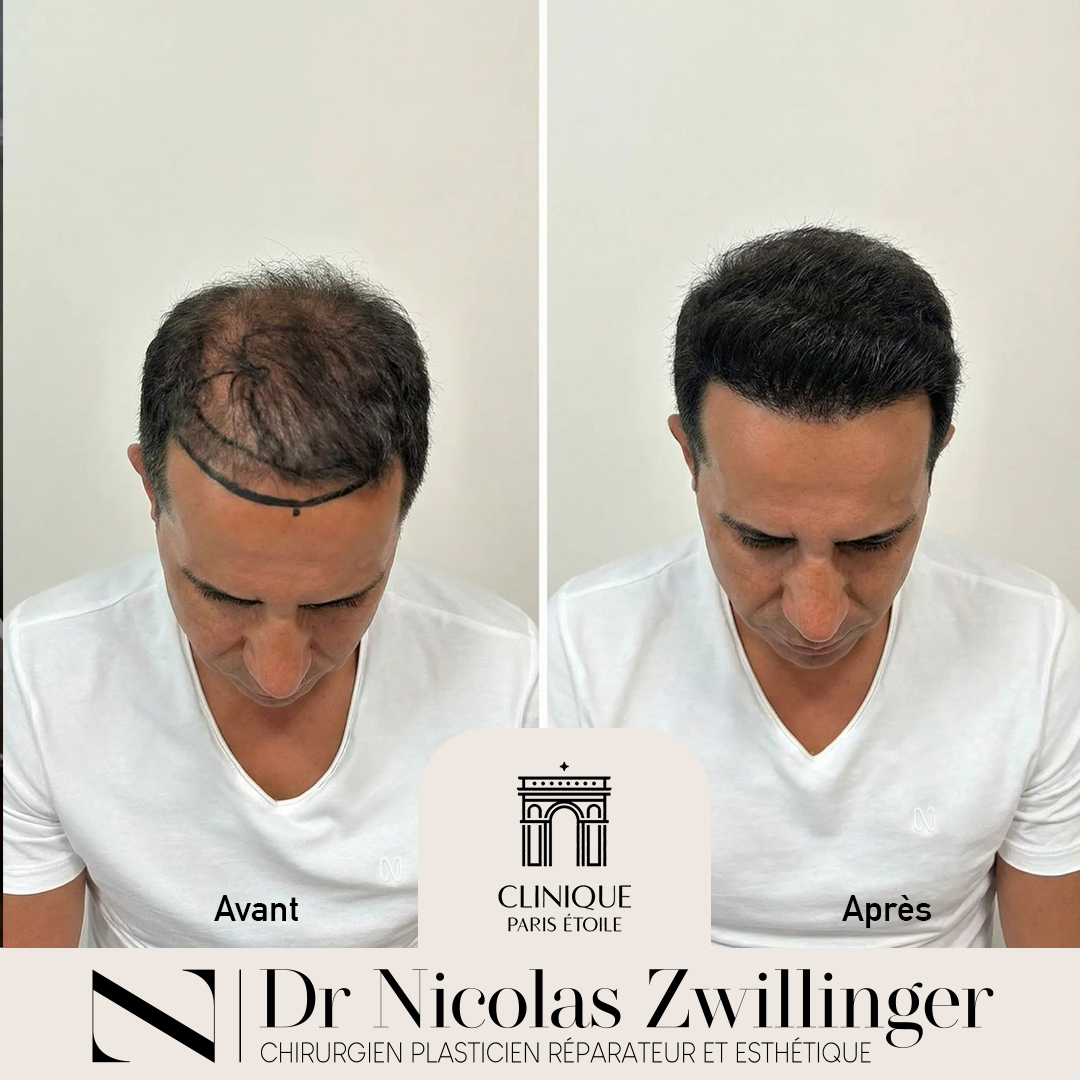
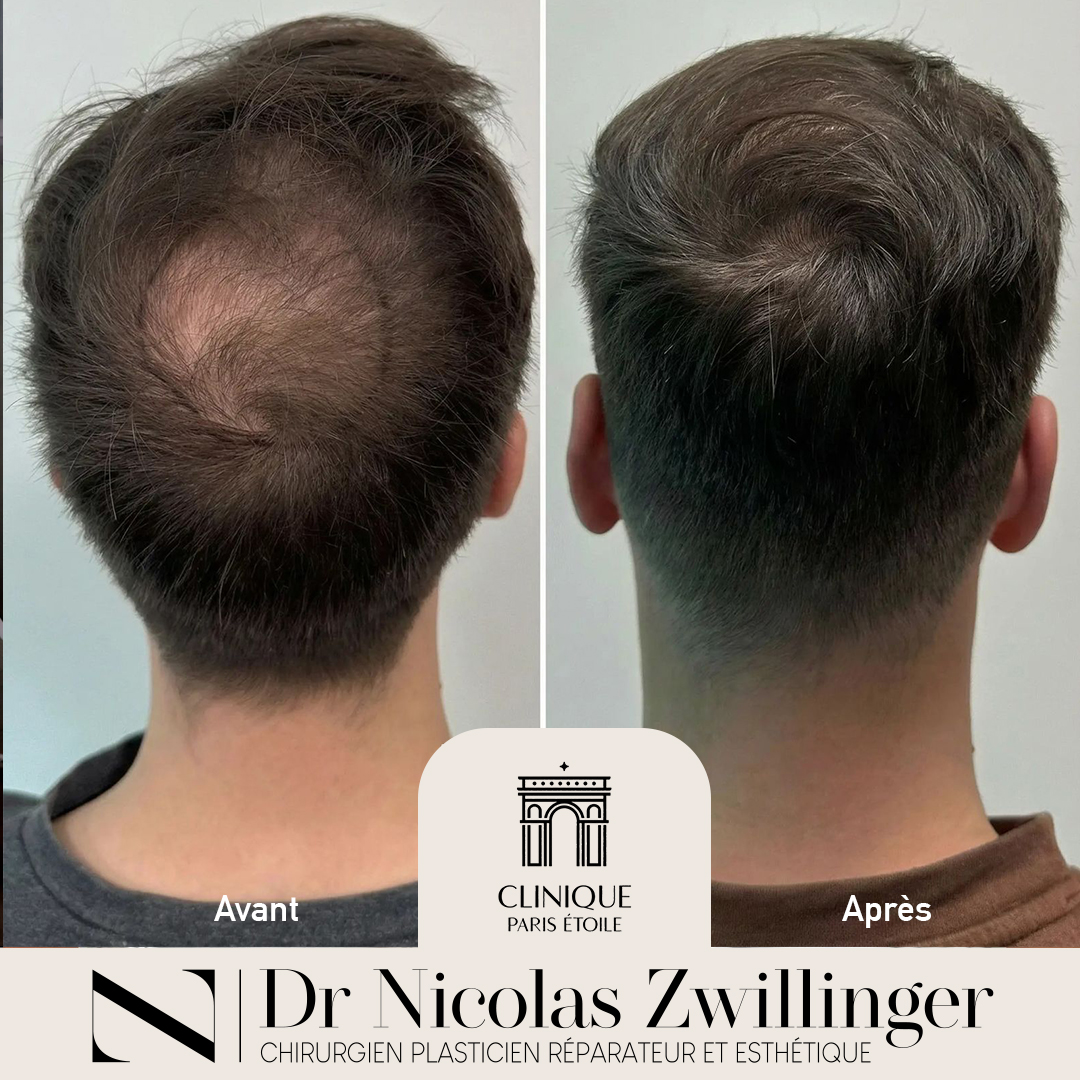
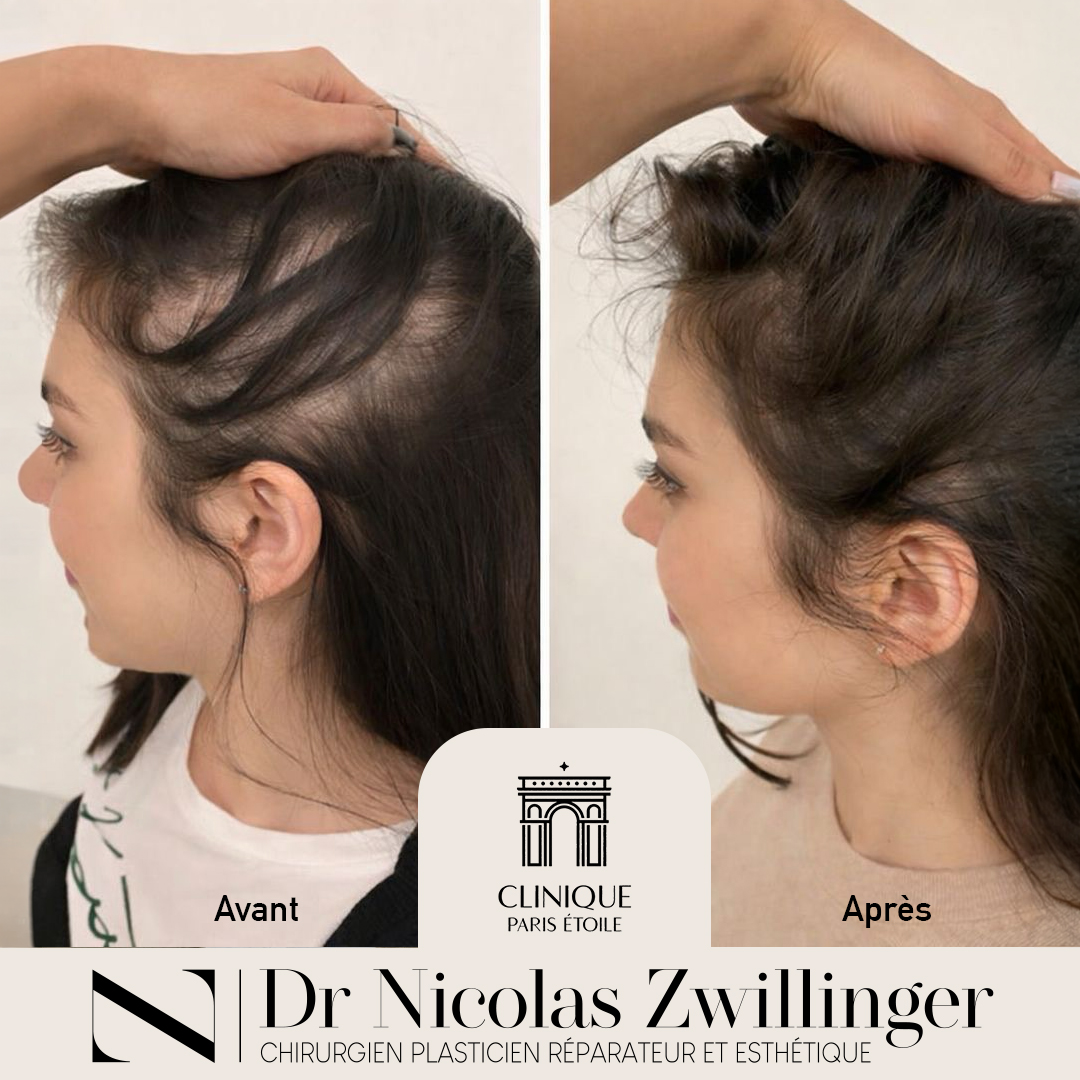
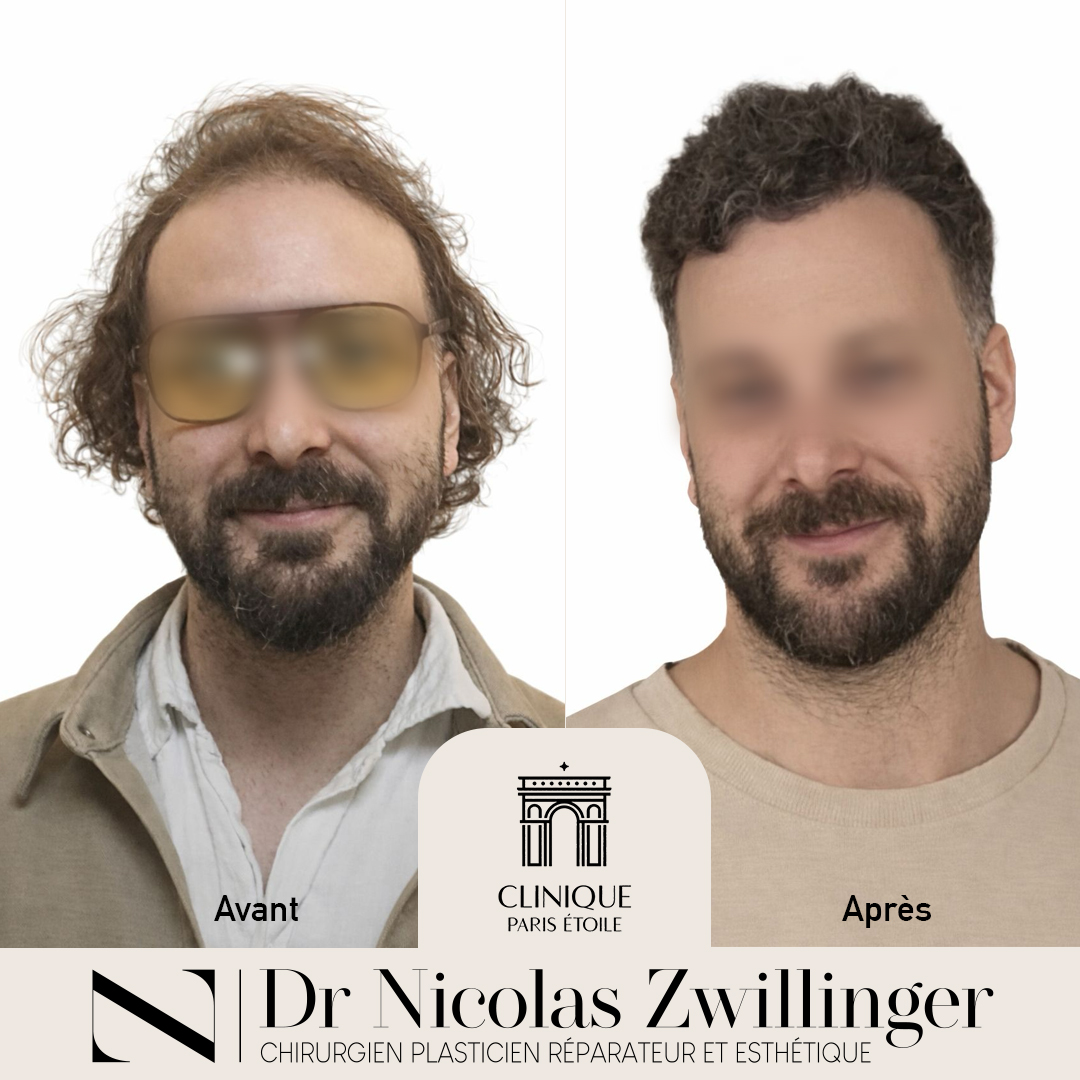
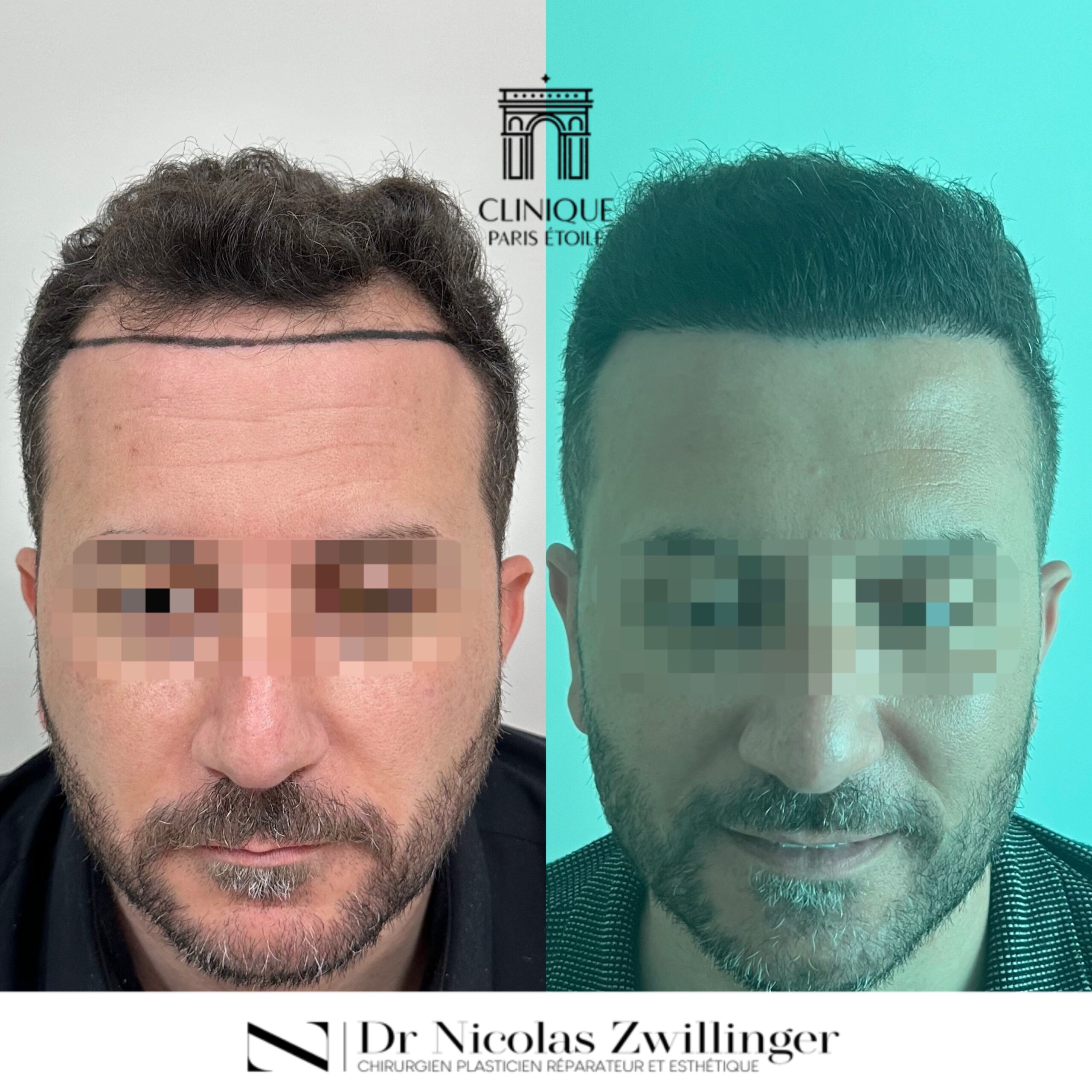
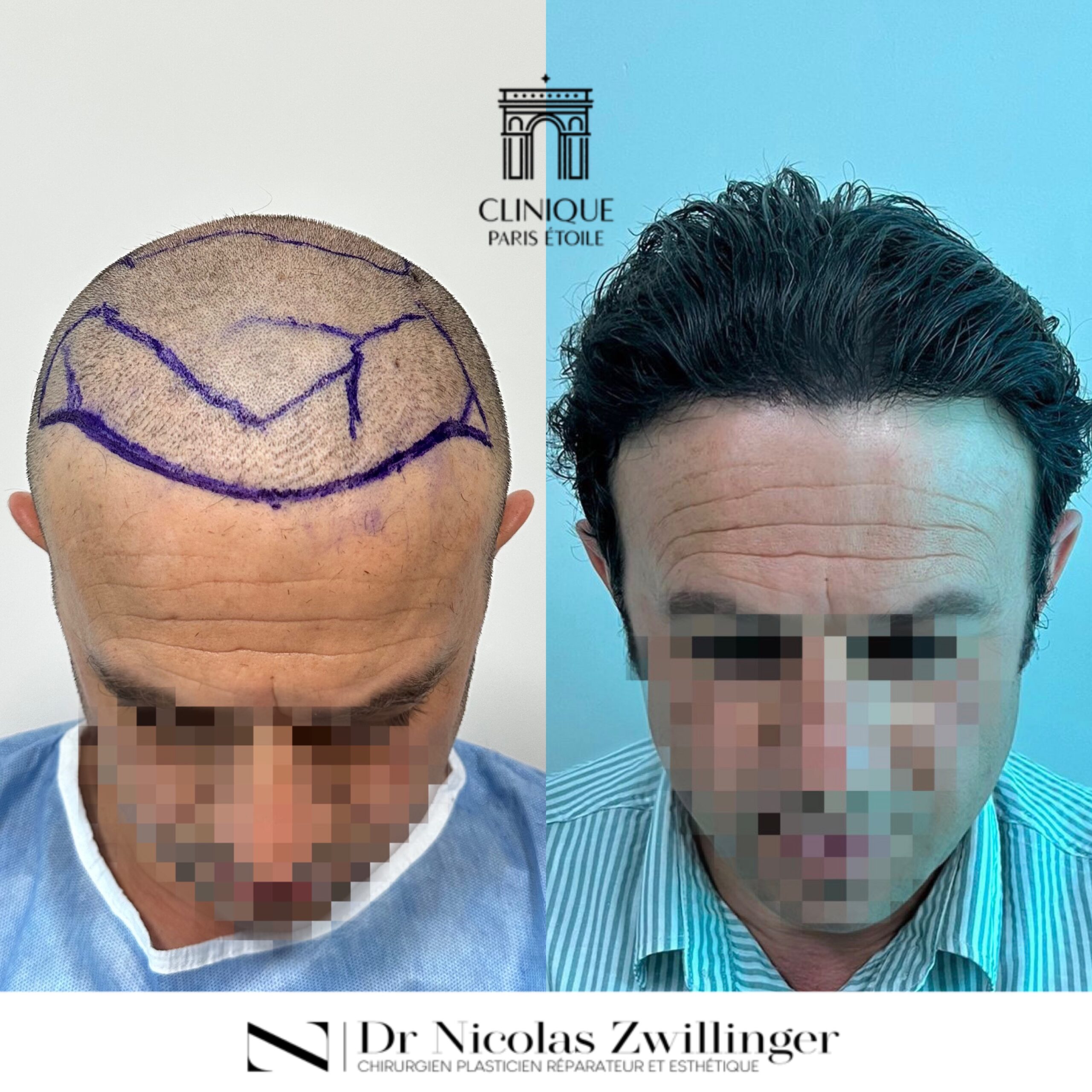
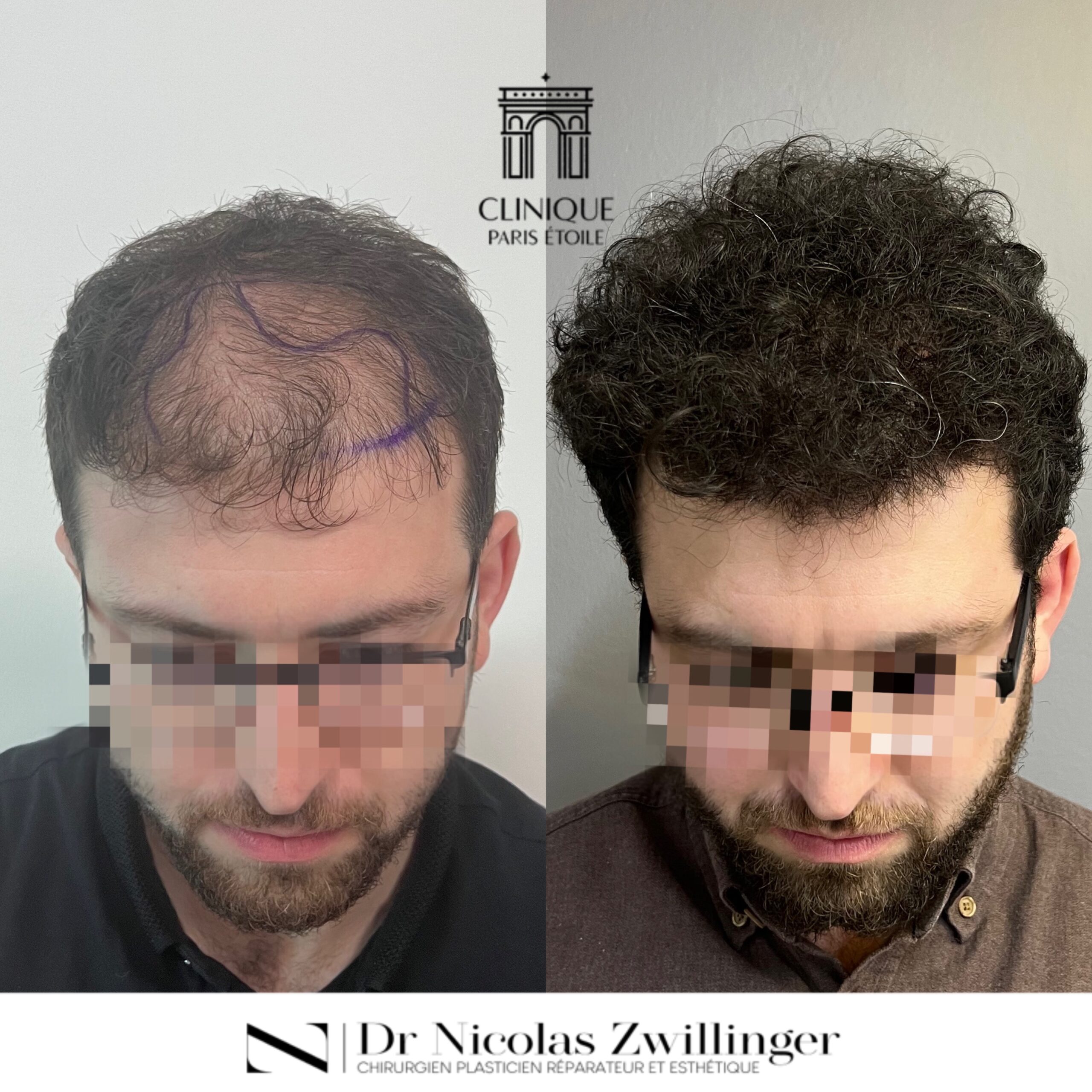
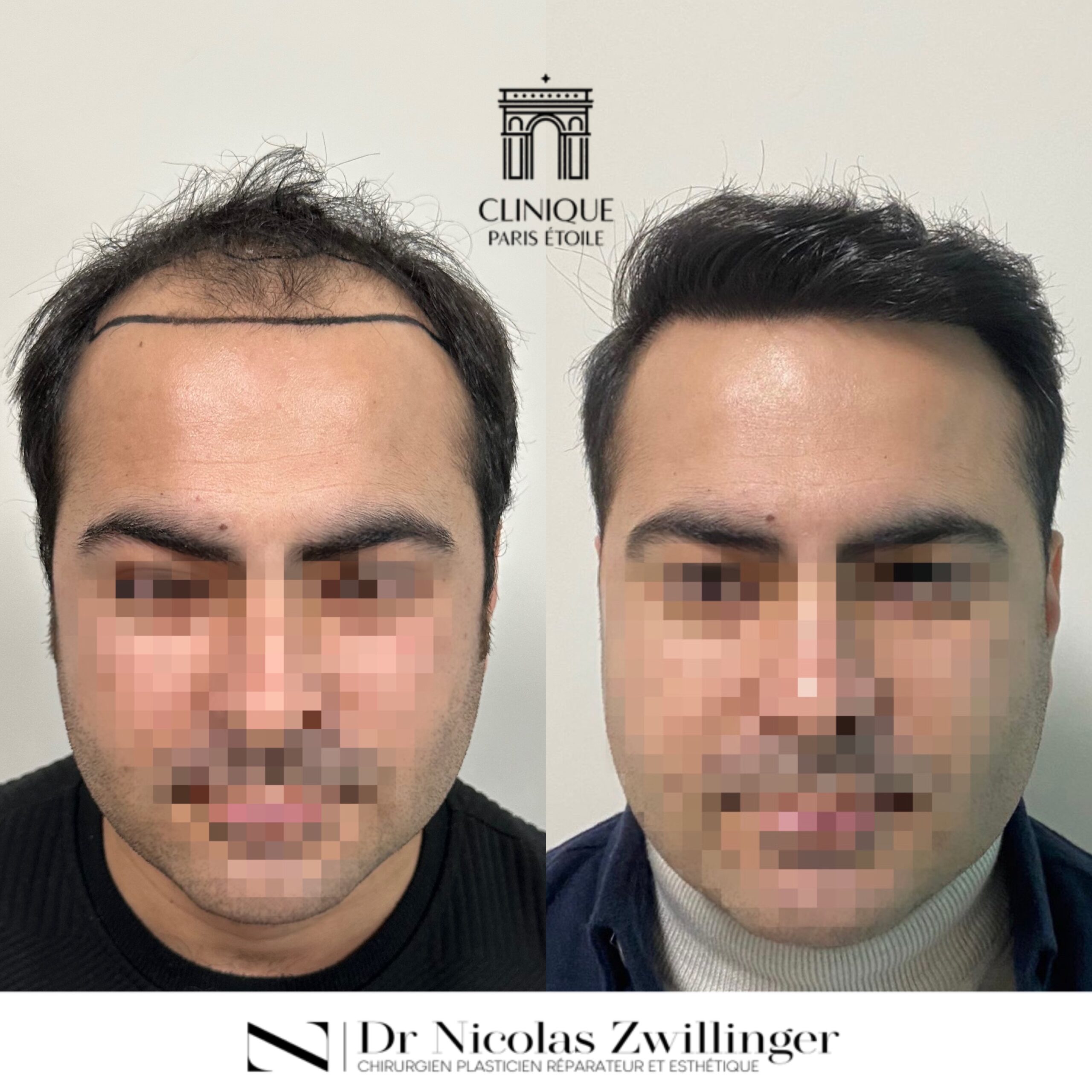
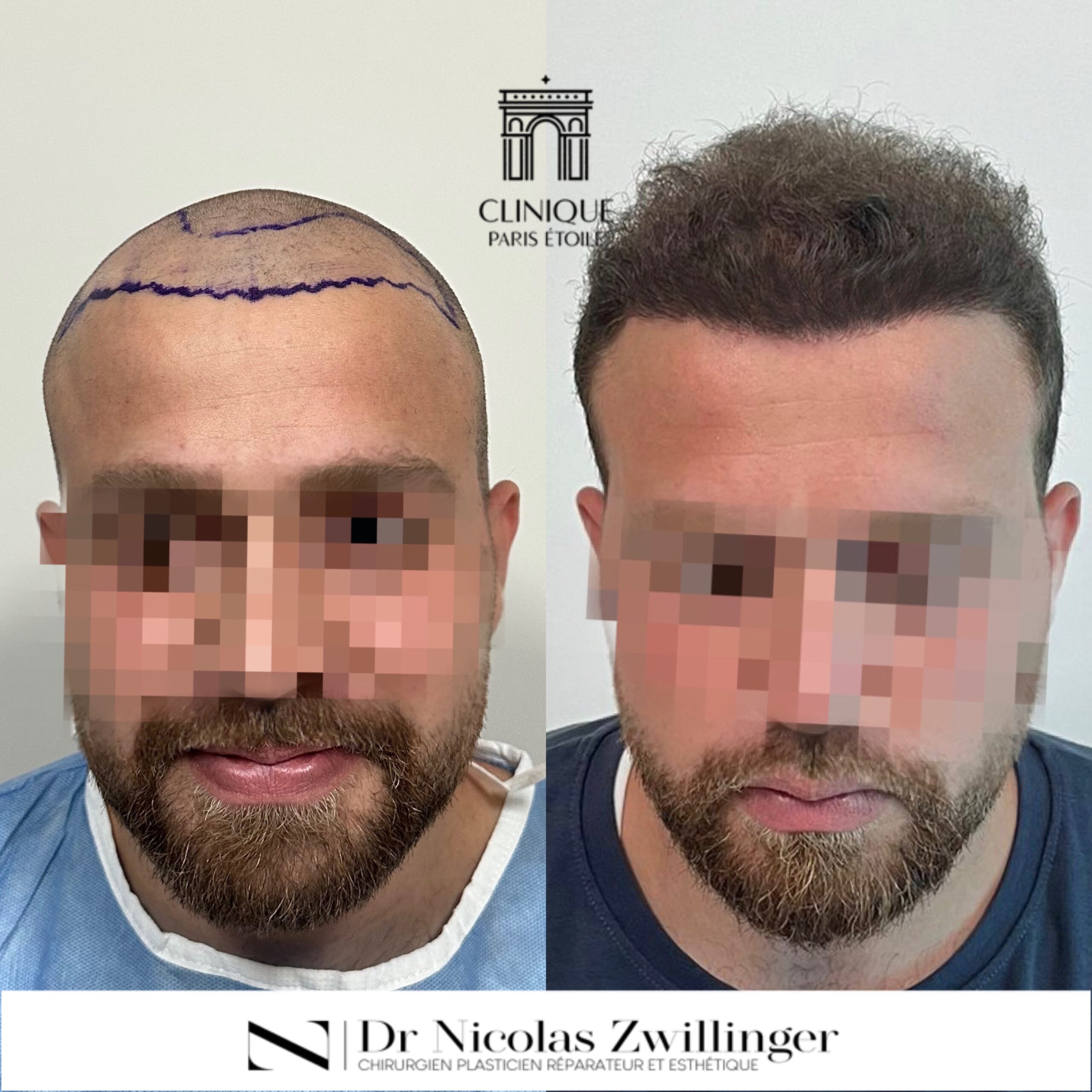
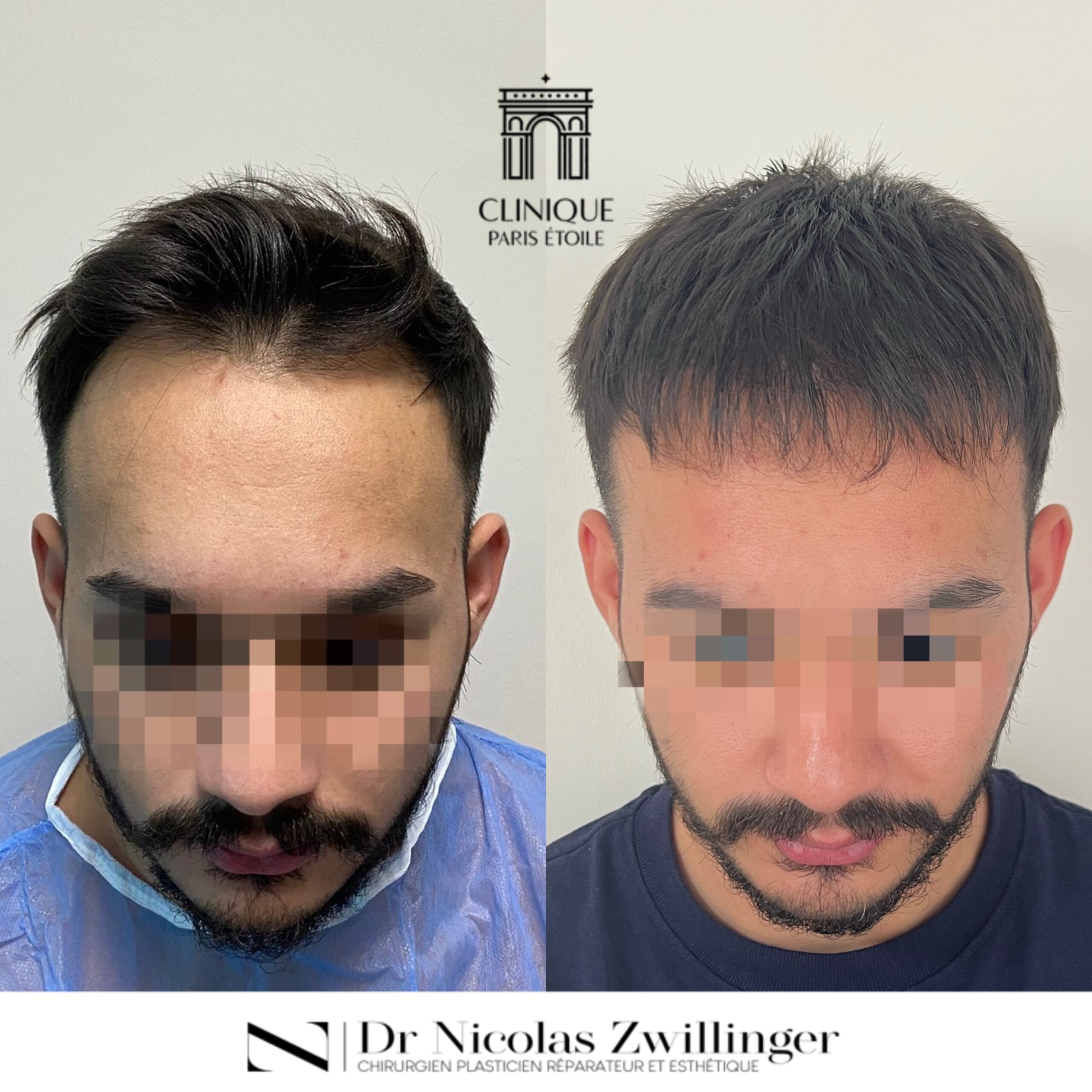
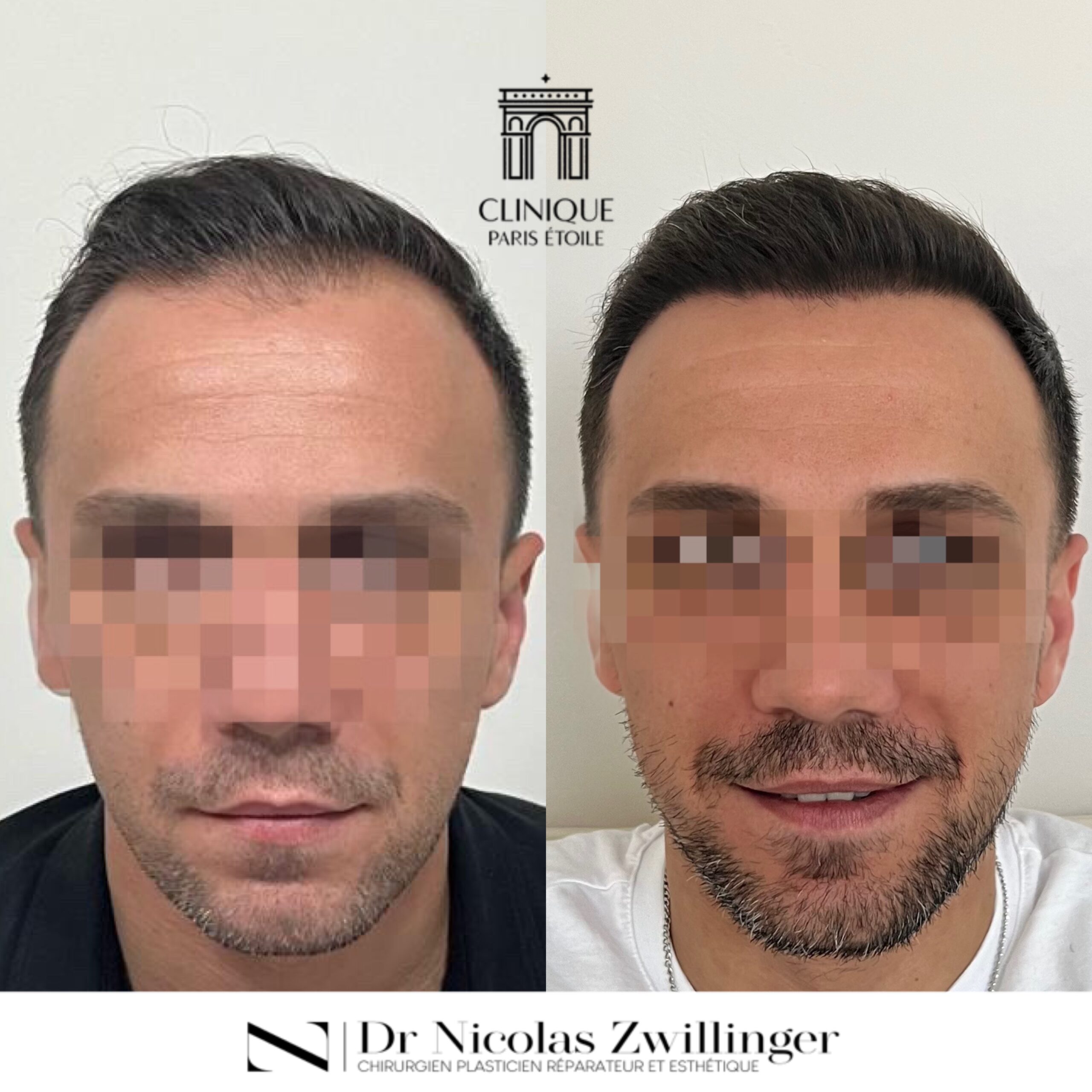
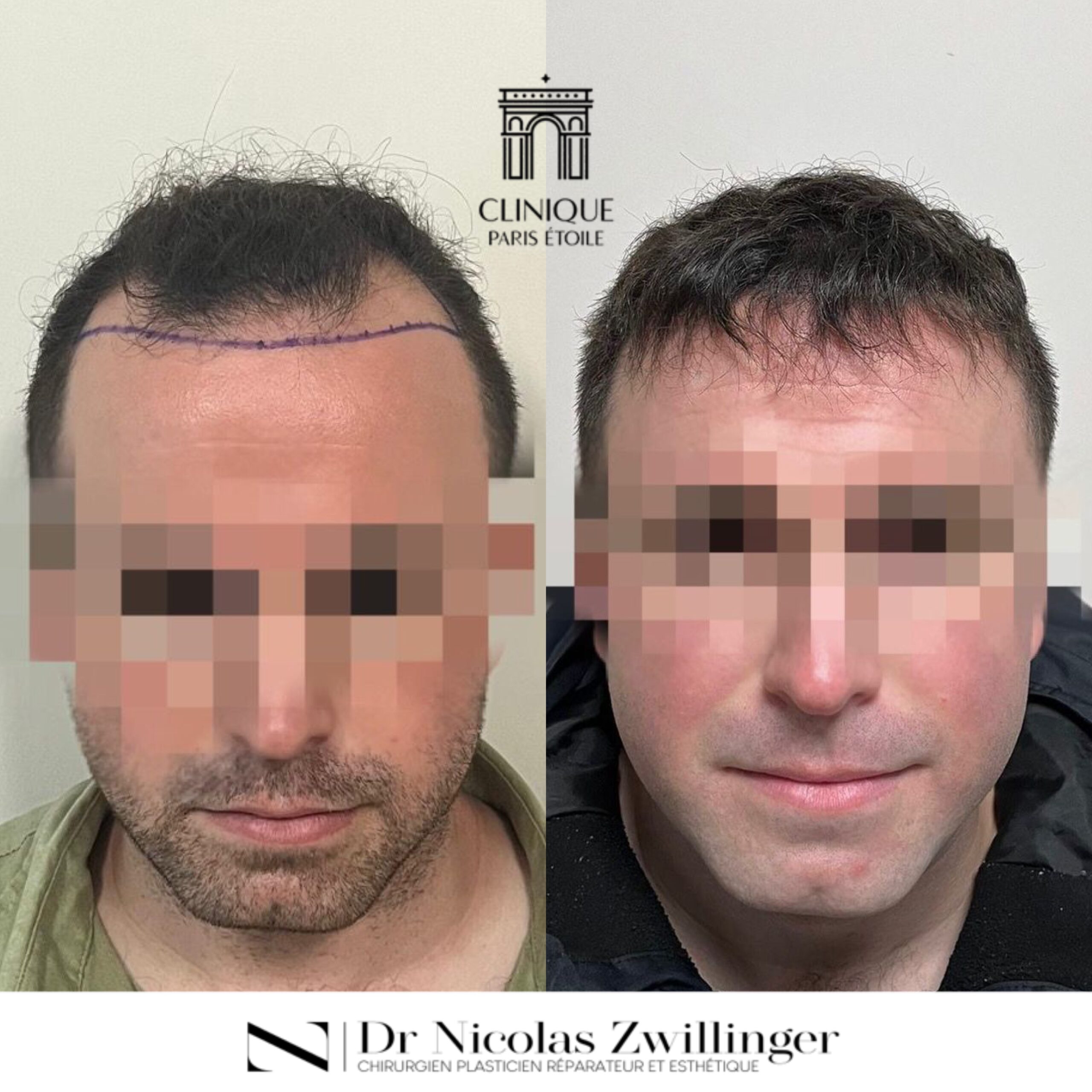
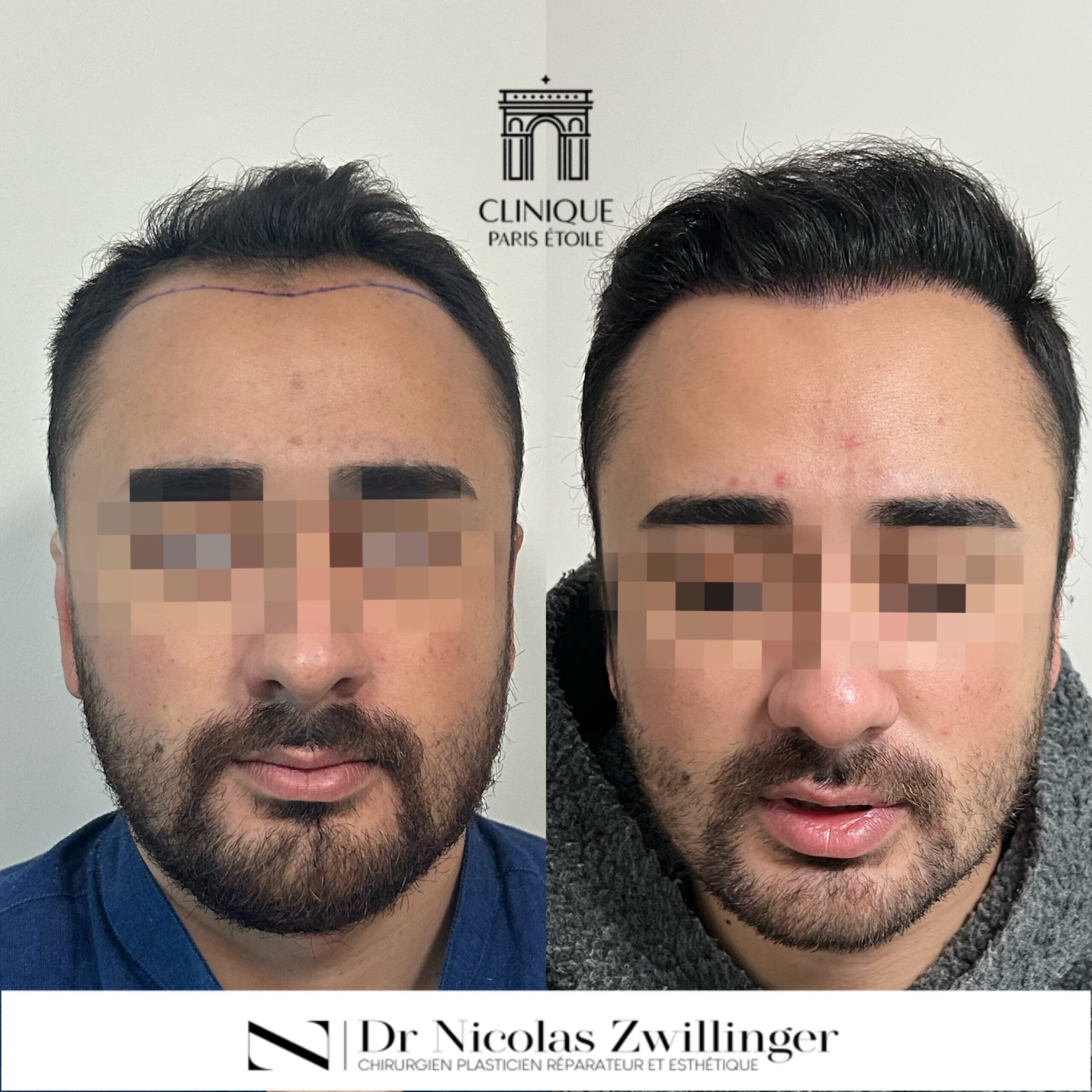
Dr. Nicolas Zwillinger specializes in hair micrografts, offering solutions to restore hair density and enhance patients’ natural appearance. He uses advanced techniques such as Sapphire FUE and the Zipper Technique, ensuring natural and long-lasting results. Each procedure is performed in a safe medical setting, using validated products and techniques, and includes personalized follow-up care to ensure a harmonious and satisfying outcome.

Personalized diagnosis and treatment of hair loss.
Consultation with Dr. Nicolas Zwillinger.
The Zipper®️ Technique is part of a modern and responsible approach to hair transplantation. Dr. Nicolas Zwillinger’s approach focuses not on quantity, but on precision. It is based on a smart implantation strategy that achieves natural-looking, dense, and long-lasting results while preserving the patient’s hair supply.
We view micro hair transplantation as a medical procedure with an artistic dimension, in which each incision is carefully planned, oriented, and integrated in a coherent manner to preserve the hair’s natural harmony.
We offer personalized consultations. These consultations allow us to assess your needs, answer all your questions, and provide a quote tailored to your situation.
We are committed to offering the highest quality at the best price in Paris, by combining medical expertise, cutting-edge technology, and personalized care.

You can book your appointment directly online via Doctolib, 24 hours a day, 7 days a week.
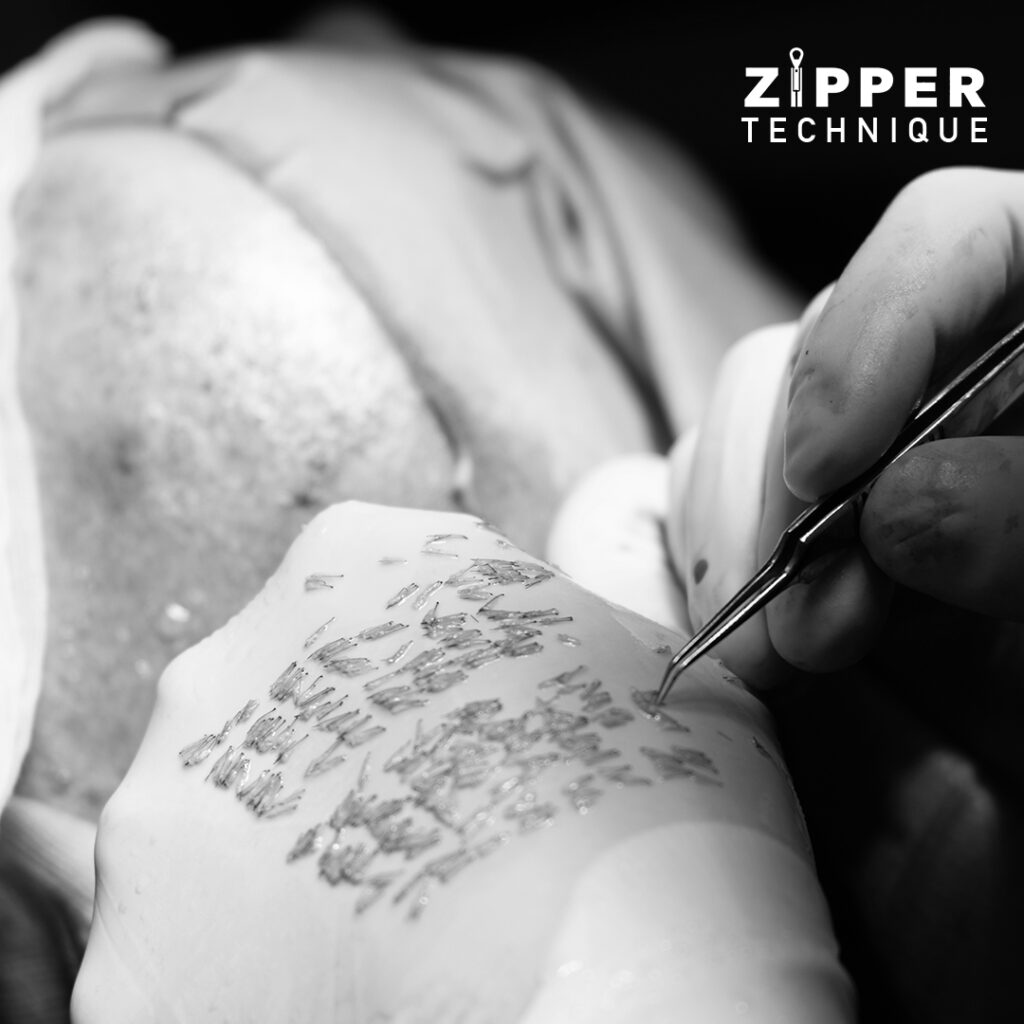
The Zipper®️ Technique is a hair transplant method based on precise control of incision angles and graft placement. Each follicular unit is implanted so that it is partially concealed by another, creating an interlocking effect similar to a zipper.
This approach is based on a carefully planned incision strategy designed to maximize visual density while respecting the hair’s natural growth pattern.
1. How does it differ from the traditional Sapphire method?
The Zipper®️ Technique allows for the use of approximately 20% fewer grafts on average to achieve a visually equivalent or even superior result. This optimization is based on very precise control of incision angles, rigorous directional orientation of the grafts, and an interlocking positioning that promotes a natural density effect.
2. Why is the “zipper” effect so important?
Grafts are implanted in such a way that they interlock with one another, creating a hairline that is both dynamic and natural. Each graft visually supports the next, enhancing the appearance of density without requiring an excessive number of grafts.
3. What is the impact on the donor area?
By reducing the number of grafts required by approximately 20%, this approach minimizes the extent of harvesting in the donor area. It thus helps preserve the donor area’s integrity while maintaining the patient’s hair supply and future treatment options.
4. Have you noticed a difference in healing? Thanks to the use of next-generation micro-punch tools, we generally observe rapid and even healing. Our goal is for the patient to have a sufficiently natural appearance 10 to 12 days after the procedure, allowing them to resume their social activities without any particular discomfort.
5. Who performs the procedure?
The procedure is performed entirely by the physician, from start to finish, thereby ensuring the artistic consistency of the procedure, the technical precision of each implant placement, and the highest level of medical safety.
6. What is your primary aesthetic goal?
Absolute naturalness. A successful hair transplant should not be noticeable. The hairline, hair direction, and density must blend harmoniously with the patient’s facial structure and overall balance.
7. Who is this technique intended for?
The Zipper®️ Technique is intended for patients seeking a conservative approach, optimized density, long-term results, and an outcome that is natural, discreet, and aesthetically pleasing.
8. Why was this technique developed?
The Zipper®️ Technique was designed to enhance the natural appearance of the results while ensuring long-term preservation of the donor area. It represents a step toward a more strategic, artistic, and patient-centered approach to hair transplantation.