

For many women with lipedema, a diagnosis comes only after several years—sometimes even several decades—of uncertainty. Some patients report having consulted numerous healthcare professionals, tried different diets, increased their physical activity, or undergone various cosmetic treatments before finally receiving an explanation for their symptoms.
For a long time, they sometimes thought their difficulties were simply due to weight gain, a lack of physical activity, or cellulite. However, behind these often trivialized symptoms may lie a chronic condition that is still largely unknown: lipedema.
A disease that is still not well understood
Although lipedema primarily affects women and is believed to affect several million people in Europe, this condition remains largely unknown not only to the general public but also to some healthcare professionals.
Many patients had never heard of lipedema before their diagnosis. This lack of awareness largely explains why the initial symptoms are often attributed to other, more common causes, such as simple weight gain, hormonal fluctuations, poor venous or lymphatic circulation, or even severe cellulite.
This confusion often delays referral to a specialist who can diagnose the condition.
Symptoms That Are Often Downplayed
One of the main challenges in diagnosis stems from the gradual onset of symptoms.
Early in the course of the disease, patients frequently report:
• a sensation of heavy legs;
• a gradual increase in the size of the thighs and legs;
• Pain upon touch;
• Significant sensitivity to pressure;
• Frequent bruising without major trauma;
• Fatigue in the lower limbs at the end of the day.
Taken individually, each of these symptoms may seem trivial. However, when they occur together, they are often a warning sign.
Throughout their journey, some patients say they have heard comments such as the following for years:
• “You just need to lose weight”;
• “Exercise more”;
• “It’s water retention”;
• “It’s cellulite.”
Even when offered with good intentions, this advice does not explain why some women continue to suffer despite their best efforts.
When effort alone is no longer enough to account for the volumes
The accounts of patients with lipedema often share the same characteristics.
Despite a balanced diet and regular exercise, the size of the legs remains disproportionate to the rest of the body. Some women even notice significant weight loss in their face, chest, arms, or waist, while their thighs and legs change very little.
This particular resistance to weight loss is one of the most telling signs of lipedema.
Over time, this situation can become extremely frustrating. Many patients end up thinking that they lack willpower or aren't trying hard enough, when in fact their symptoms have a medical cause.
The diagnostic odyssey: several years without an answer
The term “diagnostic odyssey” is frequently used in the context of lipedema.
Several years may pass between the onset of the first symptoms and a definitive diagnosis. Some patients consult their primary care physician, an angiologist, a phlebologist, a dermatologist, a rheumatologist, or even a nutritionist in succession before the diagnosis is finally considered.
During this time, they may be given various explanations, none of which truly account for all of their symptoms.
This lack of a clear answer often contributes to prolonging not only physical suffering but also psychological suffering.
The Psychological Consequences of a Delayed Diagnosis
Delays in diagnosis are not limited to physical symptoms.
Not understanding the cause of pain, weight gain, or bodily disproportion can be particularly difficult to cope with on a daily basis.
Some patients develop:
• a loss of self-confidence;
• a sense of guilt;
• constant frustration;
• social isolation;
• significant psychological distress.
For many women, the diagnosis brings, above all, immense relief. Finally being able to put a name to their symptoms allows them to make sense of their experience, stop feeling guilty, and consider appropriate treatment.
The Importance of a Specialized Consultation
The diagnosis of lipedema is based primarily on a thorough clinical examination performed by a healthcare provider with experience in this condition.
During the consultation, several factors are analyzed:
• the patient’s medical history;
• the onset and progression of symptoms;
• the distribution of fat volume;
• the presence of pain;
• the presence of frequent bruising;
• any family history.
In certain situations, additional tests may be recommended to rule out other conditions that may present with similar symptoms.
When should you see a doctor for possible lipedema?
A specialist consultation may be helpful if you have several of the following symptoms:
• a gradual and symmetrical increase in leg volume;
• disproportion between the upper and lower body;
• pain upon touch or spontaneous pain;
• feeling of heavy legs;
• frequent bruising;
• persistent swelling despite dieting and exercise.
During this consultation, Dr. Nicolas Zwillinger will conduct a comprehensive clinical evaluation to assess your symptoms, understand your medical history, and look for the characteristic signs of lipedema.
The goal is to answer your questions and offer you care tailored to your situation.
Conclusion
Lipedema is a chronic condition that is still too often diagnosed late. This situation is due in part to a persistent lack of awareness about the condition, to symptoms that are frequently dismissed as trivial, and to confusion with other, more common issues such as cellulite or being overweight.
A better understanding of the characteristic signs of lipedema now makes it possible to refer patients more quickly to a specialist and avoid years of misunderstanding, frustration, and guilt.
The earlier the diagnosis is made, the more likely it is that appropriate treatment can be implemented and that patients’ quality of life can be improved in the long term.
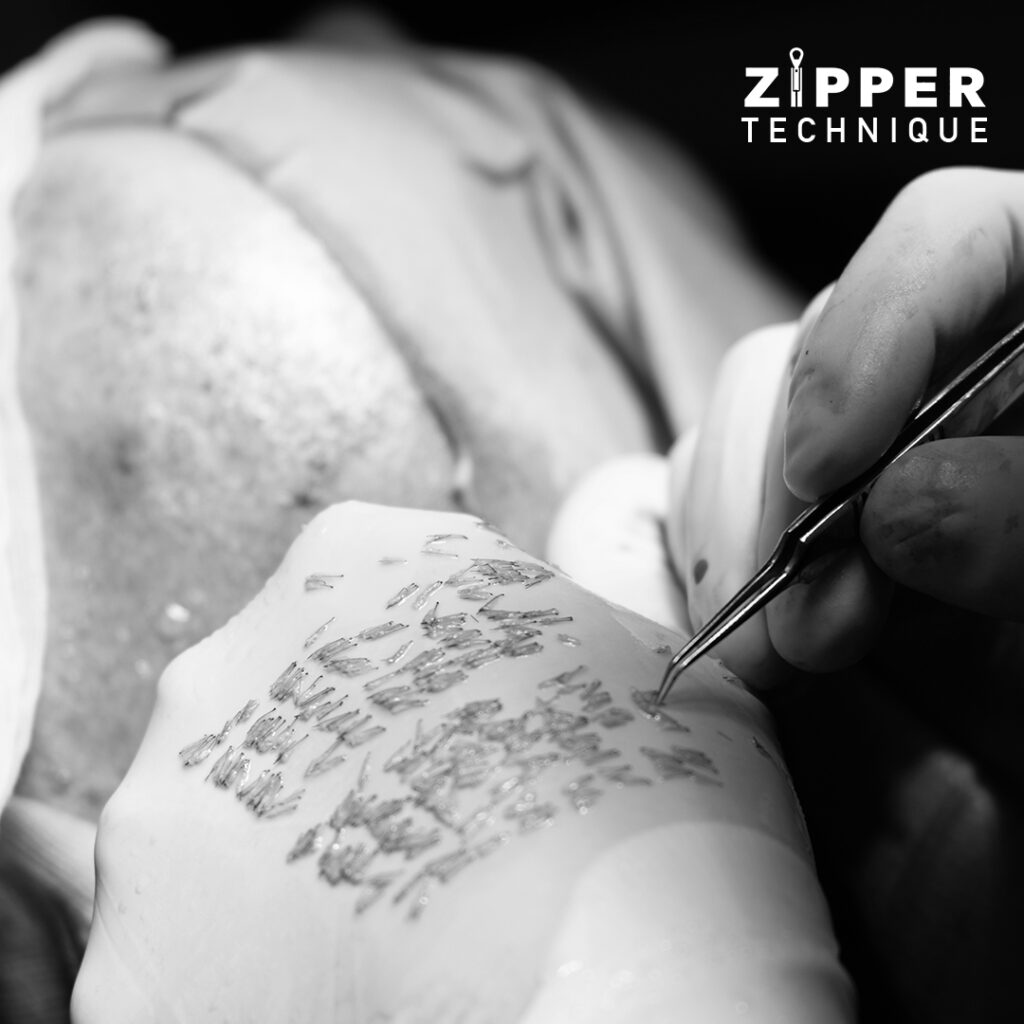
TheZipper FUE Sapphire technique is suitable for all patients, both men and women, regardless of the stage of hair loss.
It can be used to treat both:
both early-stage and more advanced baldness
the restoration of the coastline and the gulfs
hair thickening needs
Each case is evaluated during a personalized consultation in order to provide treatment tailored to each patient.
Each hair transplant is performed in accordance with the natural direction of the hair, ensuring an aesthetic, natural, and long-lasting result.
To find out if theZipper FUE Sapphire technique—exclusive to Dr. Nicolas Zwillinger—is right for you, we invite you to schedule a personalized consultation.