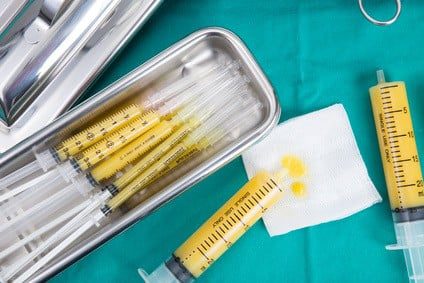
What is lipofilling?
Lipofilling, or fat grafting, is a method as old as the well-known liposuction. Both techniques emerged simultaneously in 1985, pioneered by the French surgeon Dr. Y.G. Illouz, the inventor of liposuction. At the time, the aspirated fat was quickly reinjected, without much preparation, into areas of the body with defects resulting from accidents, scars, or surgical sequelae. In the United States, coinciding with the emergence of AIDS and its effects on fat distribution (such as facial wasting following triple-drug HIV therapy, for example), Dr. S. COLEMAN refined the lipofilling technique in 1995 and renamed it Lipostructure (the principle was the same, but the fat was filtered after centrifugation) or the COLEMAN Method. Subsequently, the field of cosmetic surgery began to take a closer interest in these reconstructive plastic surgery techniques. Thus, the 2000s saw lipofilling methods extendto areas previously reserved for body implants (breasts, buttocks, and calves). Today, following the PIP implant scandal, lipofilling has gained favor with the media and the public as the method of choice for the majority of cosmetic augmentation procedures.
Key points to understand about lipofilling
- It’s as if fat cells were being transferred from one location to another:
- The net result in terms of weight is therefore zero; don't expect to lose weight after lipofilling.
- The transferred fat is living tissue:
- It’s not oil, silicone, or an injectable absorbable product—it’s cells
- This means that the resulting increase in volume is neither fixed nor known in advance, and that your weight after the procedure will affect the aesthetic outcome (if you gain weight, the results will be more noticeable)
- The fat must be harvested from another area, which can improve your body contour at the same time:a 2-in-1 procedure
- The more fat is available, the larger the grafts that can be taken
- The usual areas for fat removal are the abdomen, hips, thighs, knees, and back
- This procedure is considered permanent, unlikehyaluronic acid injections
- Lipofillingis a procedure that can easily be repeated after 6 months to achieve even better results.
Which areas are treated with lipofilling?
- Delicate areas such as those on the face are easily treated withlipofilling (dark circles, cheekbones, chin, wrinkles, lips); these have historically been the areas of choice for the Coleman technique.
- Body parts that were once reserved for implants are excellent sites for grafts, such as the buttocks, breasts, calves, and even the hips or chest (pectus excavatum)
- A specific application for the breasts, wherelipofillingcan be performed following breast reconstruction or to correct certain issues with breast implants (folds, ripples, or dimples).
Thanks to the consistent precision of our methods and the use of fat extraction and purification devices such as the Lipocollector Body-Jet, my team and I can now offerlipofillingto any patient (even those who are slim) and on any part of the body or face, delivering natural, simple, and long-lasting results.